
Better generalization of skills
Skills practiced with caregivers in real routines are more likely to carry over beyond the therapy room.
Helping families build confidence, consistency, and practical ABA strategies beyond therapy sessions.
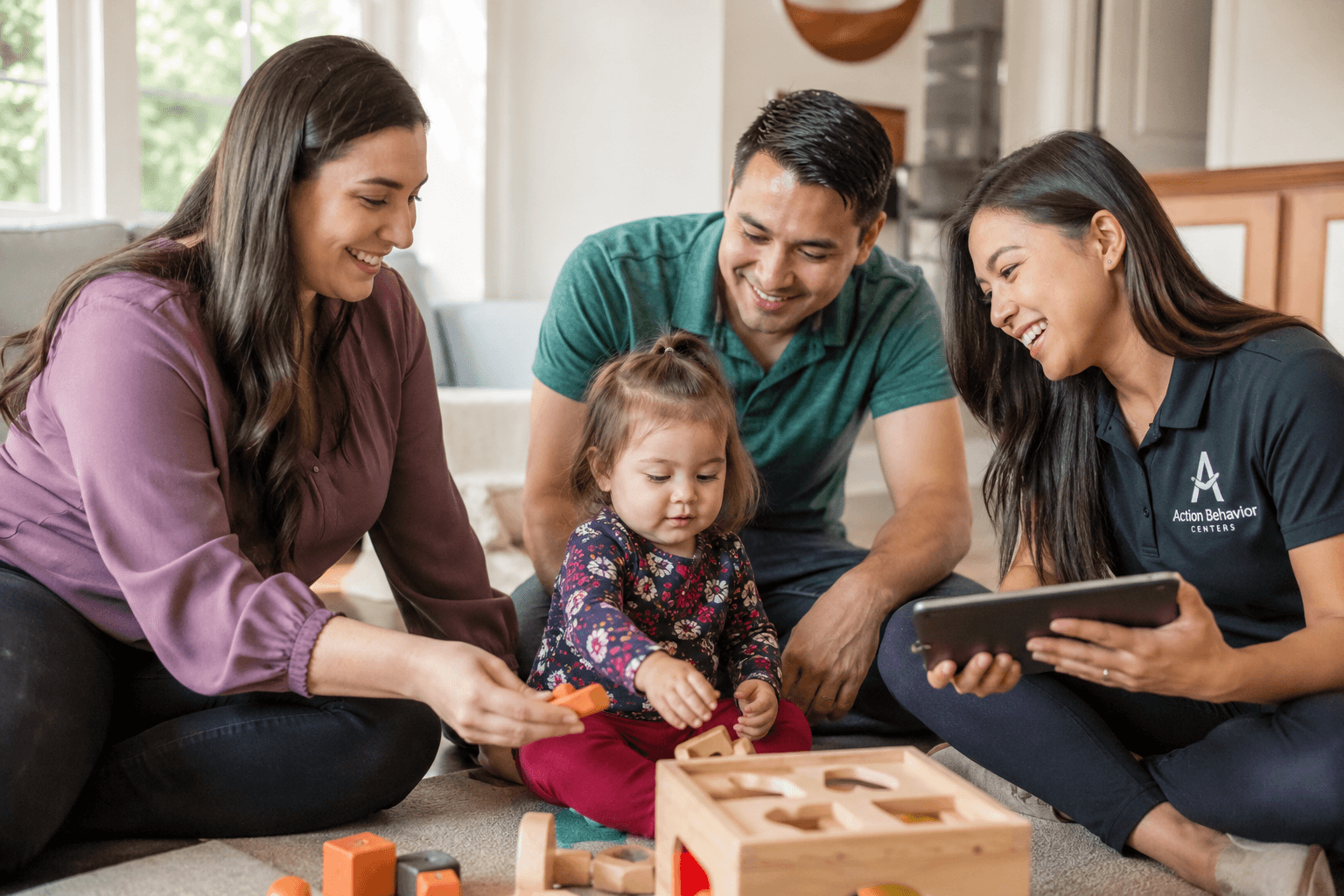
Parent training (also called caregiver coaching) helps families understand the ABA strategies used in therapy and apply them during everyday routines. Your BCBA and clinical team teach practical skills—like prompting communication, using reinforcement, managing transitions, and responding to challenging behavior—so progress continues at home, school, and in the community.
Rather than asking caregivers to become therapists, parent training focuses on collaboration: learning what works for your child, practicing strategies with coaching, and building confidence to support skill-building between sessions.
When caregivers are active partners in ABA therapy, children often have more opportunities to practice skills in the settings where they matter most.
Skills practiced with caregivers in real routines are more likely to carry over beyond the therapy room.
Shared language and strategies help everyone support the same goals in different environments.
Coaching helps families feel prepared to respond calmly and effectively during everyday challenges.
Regular parent training creates space to share updates, ask questions, and adjust goals together.
Children get more practice opportunities when caregivers use evidence-based strategies throughout the day.
Eden's parent training is hands-on coaching—not a lecture. Your BCBA or clinical supervisor models strategies, watches you practice, and gives feedback you can use the same day.
Clinicians demonstrate prompting, reinforcement, and transition strategies during real routines so caregivers see exactly what to do.
Coaching includes gentle correction, praise for caregiver attempts, and adjustments matched to your child's responses.
When a strategy is not working, your team reviews data, environment, and motivation—not blame—to refine the plan.
Short, achievable practice goals help families feel prepared for meals, outings, and bedtime—not overwhelmed by a long skill list.
Between sessions, families receive clear priorities for practice so progress continues without requiring caregivers to run full therapy sessions.
Predictable strategies and shared language often reduce daily conflict, helping caregivers respond calmly and consistently.
Most learning happens during everyday life. Eden coaches caregivers to embed ABA strategies into routines your family already has.
Visual schedules, first-then boards, and step-by-step teaching for dressing, breakfast, and getting out the door.
Seating, prompting, reinforcement for trying foods or using utensils, and calm expectations—coordinated with feeding specialists when applicable.
Consistent sequences, transition warnings, and reinforcement for independent sleep skills within your family's cultural practices.
Preparation, visual supports, and reinforcement for stores, parks, appointments, and family events.
When clinically appropriate, structured toilet training plans with data collection, scheduled sits, and celebration of small steps.
Task analysis for tooth brushing, hand washing, and dressing with fading prompts as independence grows.
Parent training emphasizes preventing challenging behavior by teaching skills and adjusting environments—not only reacting after problems occur.
Learn to adjust triggers, offer choices, and set up environments so success is more likely before behavior escalates.
Teach requesting, protesting, and commenting so children can meet needs without challenging behavior.
Use praise, preferred activities, and natural rewards to strengthen cooperation, communication, and new skills.
Practice what to do instead of challenging behavior—with the same function (attention, escape, access, sensory).
Align responses across caregivers so children receive predictable consequences for both appropriate and inappropriate behavior.
When aggression or elopement is a concern, families receive clear safety steps and when to seek emergency support.
Practical, caregiver-friendly guides to help you understand your child's goals and support progress at home.
Learn how treatment goals are chosen, what mastery looks like, and how to track meaningful progress with your clinical team.
Discover how to use praise, preferred items, and natural rewards to encourage communication, cooperation, and new skills.
Understand common reasons behavior happens and how to respond with prevention, teaching, and consistent follow-through.
Support requesting, commenting, and social communication with prompts, modeling, and opportunities throughout the day.
Use visual supports, predictable routines, and step-by-step teaching for meals, bedtime, hygiene, and transitions.
Practice classroom readiness skills, independence, and collaboration with school teams when appropriate releases are in place.
Eden supports the whole family with coaching, education, and strategies that fit your home and community life.
Build predictable schedules and shared expectations so children know what comes next and caregivers feel less overwhelmed.
Practice therapy-aligned strategies during play, chores, community outings, and daily living activities.
Help brothers and sisters understand autism, participate positively, and feel supported as part of the family team.
Learn the why behind strategies so grandparents, babysitters, and other caregivers can support goals consistently.
Align language, reinforcement, and expectations between home, clinic, school, and community settings.
Meet with your BCBA or supervisor for hands-on coaching, feedback, and adjustments to your child's plan.
With your written consent, Eden can help align home and school strategies so children hear consistent expectations.
Reinforcement, visual supports, and communication approaches that work at home may support classroom participation.
Discuss how ABA goals relate to school goals without duplicating or contradicting the IEP.
Prepare for new grades, teachers, or school settings with practice and caregiver communication.
BCBAs may attend school meetings when authorized to answer clinical questions about behavior support.
School-based ABA may require separate agreements. Eden clarifies which services occur where.
Progress summaries are shared only when families authorize release of information.
Parent training unfolds over time as trust, skills, and your child's needs evolve.
Your BCBA explains which caregiver skills connect to your child's current treatment goals.
Clinicians demonstrate strategies during meals, play, or transitions in your home or clinic.
You try strategies while the team coaches—building confidence through repetition.
Short, realistic practice targets keep momentum without overwhelming the family.
Data and caregiver report inform whether strategies should continue, fade, or change.
Grandparents, babysitters, or siblings may join when families want broader consistency.
Caregiver training is a recognized component of comprehensive ABA when it supports treatment goals and generalization. Payers including Virginia Medicaid often expect documentation of family involvement.
Virginia Medicaid and MCO plans emphasize individualized treatment, family involvement, and evidence-based services. Eden aligns documentation to applicable requirements when ABA is authorized.
Printable tools families can use between sessions. New guides and checklists are added regularly.
Quick-reference guides on reinforcement, prompting, and daily routine supports.
Simple checklists to track communication tries, routines, and caregiver practice goals.
Editable first-then boards and daily schedule templates for home and community.
Worksheets to plan transitions, prevention strategies, and replacement skills.
Common questions families ask about parent training and caregiver coaching at Eden.
What Is ABA Therapy?
Learn the foundations of evidence-based ABA and how it supports children with autism.
Learn moreGetting Started with Eden
Follow a clear path through intake, documents, insurance, and scheduling.
Learn moreABA Success Stories
Read family stories highlighting progress, partnership, and hope.
Learn moreConnect with Eden to learn how parent training and family support can be part of your child's ABA journey.