
Developmentally matched assessment
BCBA-led review of early communication, play, motor imitation, social engagement, and adaptive routines appropriate to your child's age.
Early Development Support
For young children, early support can make a meaningful difference. Eden provides play-based, family-centered ABA focused on communication, imitation, play, daily routines, and positive learning experiences.
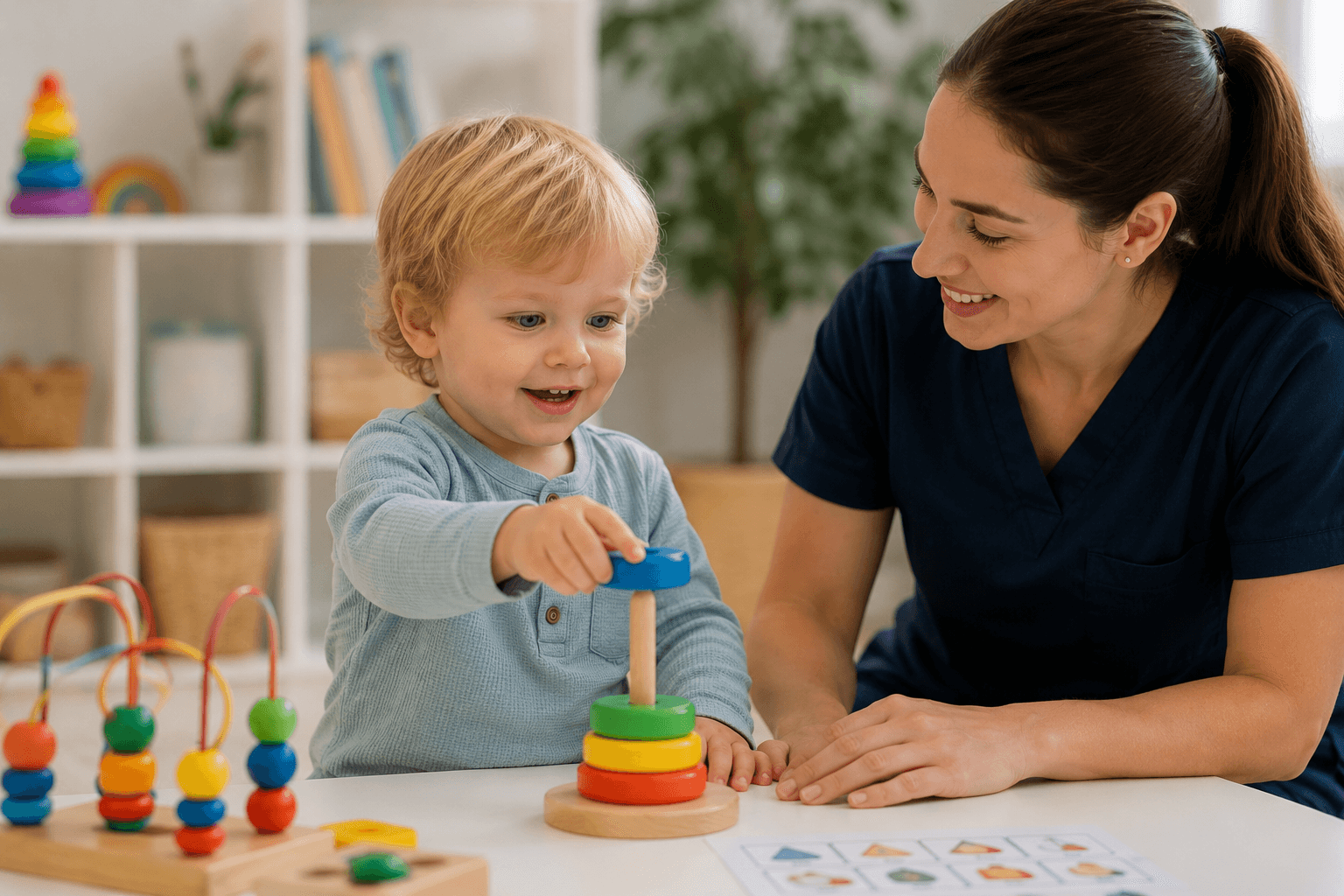
Early intervention at Eden emphasizes naturalistic learning, caregiver coaching, and developmentally appropriate goals—not rigid drills disconnected from childhood.
BCBA-led review of early communication, play, motor imitation, social engagement, and adaptive routines appropriate to your child's age.
Learning embedded in play, movement, songs, and daily activities so sessions feel engaging for young children.
Building requesting, joint attention, gesturing, vocalizations, and AAC readiness when clinically indicated.
Foundational skills such as copying actions, following simple directions, and tolerating short structured activities.
Practice during snacks, dressing, bath time, and transitions so skills connect to real family life.
Parents learn strategies during sessions to reinforce progress between visits.
Early intervention ABA may benefit toddlers and young children showing developmental differences—or families seeking proactive support after a diagnosis.
Early intervention requires patience, warmth, and clinical precision. Eden combines all three with BCBA oversight and trained implementers.
Care coordinators and BCBAs learn about your child's daily life, developmental history, and family goals.
Clinicians observe natural play and routines to identify strengths and priority teaching targets.
Short, achievable targets are selected to build momentum—communication, imitation, play, and adaptive skills.
Parents practice strategies during sessions with real-time guidance from the clinical team.
Trained staff deliver programs with positive reinforcement and child-led breaks as needed.
Supervisors analyze early data frequently and adjust teaching as the child develops.
Early goals prioritize skills that unlock later learning—communication, social connection, and participation in family routines.
Increase shared focus on objects, people, and activities with caregivers and therapists.
Build requesting, protesting, and commenting through speech, signs, or AAC as appropriate.
Copy actions with objects and body movements to support observational learning.
Develop functional and pretend play that supports cognitive and social growth.
Support mealtime, dressing, hygiene, and cleanup routines with age-appropriate independence.
Help children tolerate short structured activities, transitions, and adult-guided learning.
In early childhood, parents are the most important teachers. Eden designs intervention so families can participate confidently every day.
Learn strategies while playing and caring for your child—not only through separate lectures.
Targets connect to meals, bath, bedtime, and outings you already do each day.
BCBAs explain what skills typically come next so expectations feel realistic and hopeful.
Simple guidance for all caregivers to respond consistently and positively.
Vietnamese- and English-speaking families receive culturally respectful communication.
Early progress can be subtle. Eden helps families recognize meaningful milestones along the way.
Even for young children, data guides decisions. Eden tracks early skills carefully to adjust teaching quickly.
Short, repeated measures show whether early targets are emerging or need new teaching methods.
BCBAs may review session examples to coach RBTs and refine naturalistic teaching.
Progress is discussed in terms families understand—not only technical jargon.
Parent observations at home inform whether skills are generalizing beyond sessions.
Goals evolve quickly in early childhood; programs are revised as new skills emerge.
When required, progress summaries reflect early developmental gains for payer review.
Research supports intervening when developmental concerns first appear. Early ABA can support communication, social engagement, and adaptive skills during a period of rapid brain development—while outcomes remain individualized.
Early intervention does not guarantee specific developmental outcomes. Eden tracks measurable goals and adjusts programs based on data.
Professional guidance from CDC, AAP, and behavior analysis literature supports early identification and intervention for developmental delays.
Early intervention teams may recommend complementary specialists when concerns fall outside the BCBA scope of practice.
Diagnostic clarification, medical workup, or concerns about global development.
Late talking, feeding concerns, or AAC needs benefit from licensed SLP assessment.
Sensory, fine motor, or self-care delays may require OT in addition to ABA.
Hearing screening or evaluation when communication delays may have auditory causes.
Eden supports warm handoffs with family consent but does not provide medical diagnosis or specialty therapy outside each clinician's license.
Early services work best when families are partners—not passive observers.
Early intervention services may be covered through private insurance or Virginia Medicaid EPSDT when clinically necessary and authorized.
Early intervention does not guarantee specific developmental outcomes. Eden focuses on ethical, individualized services and accurate documentation while families work with their payers on authorization.
Connect with Eden to explore early intervention ABA built around your family routines and your child's unique strengths.