
Generalization where it matters
Practicing communication, self-care, and social skills at home may help children use those skills during the routines they face every day.
Northern Virginia · Home-Based ABA
Home-based ABA therapy brings clinically supervised Applied Behavior Analysis into the place your child already knows best—their home. Skills are practiced during meals, play, hygiene, homework, bedtime, and everyday transitions so learning may carry over into daily life.
Eden ABA Therapy serves families across Northern Virginia with individualized treatment plans, BCBA oversight, and caregiver coaching designed around your child's strengths, priorities, and routines. Individual progress varies; our team focuses on meaningful, measurable goals—not promises of a cure.
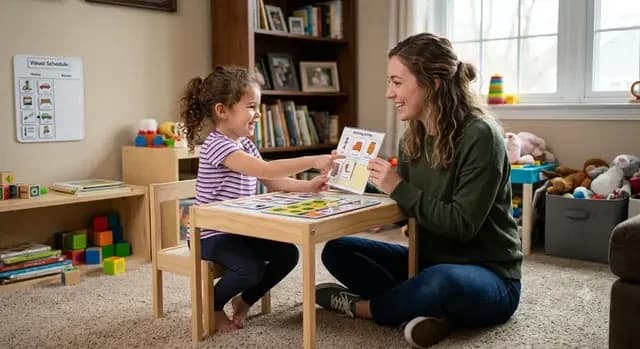
Home-based ABA therapy is Applied Behavior Analysis delivered within a child's home environment. Rather than traveling to a clinic, therapy takes place where children spend much of their day, allowing learning opportunities to occur naturally during everyday activities and routines.
Research-supported ABA programs use positive reinforcement, data collection, skill-building strategies, and individualized treatment planning to help children develop communication, independence, social interaction, emotional regulation, and adaptive living skills.
Sessions are often implemented by Registered Behavior Technicians (RBTs) under the supervision of Board Certified Behavior Analysts (BCBAs), ensuring treatment follows established clinical standards and remains tailored to each child's progress.
Because therapy occurs within familiar surroundings, children may feel more comfortable practicing skills that directly impact daily life, including mealtime routines, toileting, hygiene, transitions, play, communication, and family interactions.
Leading public health and pediatric guidance recognizes that children often learn best in environments where skills will actually be used. Home-based ABA allows therapy to be woven into real routines rather than isolated in a separate setting.
Practicing communication, self-care, and social skills at home may help children use those skills during the routines they face every day.
For some children, learning in a familiar space may reduce anxiety linked to new buildings, long commutes, or crowded waiting areas.
Siblings, caregivers, and household routines become part of the teaching context—supporting carryover between formal sessions.
BCBAs can observe actual home demands—noise levels, schedules, safety concerns—and write goals that reflect your family's reality.
Treatment goals are individualized. Depending on assessment and family priorities, home-based programs may focus on:
Functional requests, comments, AAC use, conversation starters, and understanding others during natural interactions.
Turn-taking, joint attention, sibling play, greetings, and age-appropriate peer interaction coached in context.
Dressing, toileting, hygiene, meal participation, and household tasks practiced where they naturally occur.
Skill-building approaches designed to reduce interfering behaviors that limit learning, safety, or family participation.
Morning, after-school, and bedtime sequences; moving between activities with less distress and more predictability.
Staying with caregivers, responding to name, door and street safety, and emergency routines appropriate to age.
Self-management, waiting, following multi-step directions, and building confidence for age-appropriate autonomy.
Practicing skills that support outings—waiting in line, tolerating stores, using public restrooms, and following community rules.
Parents and caregivers have direct opportunities to observe therapy, learn strategies, and reinforce skills between sessions.
Children practice important daily living skills exactly where they are used, helping promote generalization and independence.
Receiving therapy at home may reduce stress associated with unfamiliar settings and transportation.
Programs are individualized around the child's home routines, interests, strengths, and developmental needs.
Home-based services can often accommodate family schedules while reducing travel demands.
Therapists can support communication during meals, play, household activities, sibling interactions, and community preparation.
Children learn how to use newly acquired skills within the environments they encounter most often.
Families receive practical tools and strategies to support continued progress outside formal therapy sessions.
Home-based ABA at Eden follows professional supervision standards with BCBA oversight, ethical consent practices, and family-centered collaboration in natural routines.
A BCBA-led review of developmental history, caregiver priorities, and home routines helps determine whether home-based services are clinically appropriate.
Goals are written around communication, daily living, behavior, safety, and social skills that matter in your child's real home environment.
Registered Behavior Technicians deliver sessions while supervising BCBAs monitor data, adjust programs, and train staff on updated protocols.
Parents learn practical strategies during meals, transitions, play, and bedtime so progress continues between formal therapy sessions.
Session data guides treatment adjustments, goal mastery decisions, and ethical modifications when a skill is not progressing as expected.
When clinically appropriate, Eden coordinates with schools, other providers, and community supports to support generalization.
Research and clinical practice consistently show that caregiver involvement may improve how well skills carry over outside therapy sessions. Eden includes parent and caregiver training as a core part of home-based care—not an optional add-on.
BCBAs and supervising clinicians model strategies during meals, play, and transitions so caregivers learn what to do in the moment.
Families receive step-by-step support on reinforcement, prompting, visual supports, and consistency—aligned with the child's current treatment plan.
When multiple adults support a child, training helps everyone use similar approaches to reduce confusion and support progress.
Goal changes, new strategies, and discharge planning are discussed with families using consent-based, transparent communication.
Home-based ABA is designed to meet children where they are—literally. Therapists and BT/RBT staff embed teaching into the activities your family already does.
Mealtimes offer rich opportunities for communication, tolerance of foods, utensil use, sitting at the table, and family conversation.
ABA treatment is data-informed. Eden's clinical team uses session information to understand what is working, what needs refinement, and when goals should be updated.
BT/RBT staff record objective information on target skills and behaviors during each visit, following protocols written by the supervising BCBA.
Supervising BCBAs analyze trends, observe sessions, and ensure treatment remains ethical, effective, and aligned with the authorization.
Caregivers receive understandable updates on mastery, emerging skills, and areas that may need more practice or a strategy change.
When data show plateau or regression, goals and teaching procedures may be modified—always with family input and clinical justification.
Many children learn best when skills are practiced in the same environment where they will ultimately be used. Home-based ABA therapy allows treatment to be integrated into everyday routines and family life.
Children can work on:
Home-based services are not the right fit for every child. A BCBA-led assessment helps determine the most appropriate setting. Home-based ABA may be especially helpful when:
Clinical recommendations always depend on individual assessment, safety considerations, and family preferences.
Starting home-based ABA is a partnership. While every family's timeline differs, most intake paths include similar early milestones.
Week 1
Families complete intake forms, share diagnostic and insurance information when available, and discuss scheduling and home logistics with Eden's team.
Weeks 1–2
A BCBA conducts clinical interviews and observations—often in the home—to understand strengths, barriers, routines, and caregiver priorities.
Weeks 2–3
The BCBA drafts individualized goals and recommended hours. Eden supports insurance or Medicaid authorization paperwork when benefits apply.
Weeks 3–4
Assigned BT/RBT staff start direct sessions under BCBA supervision. Caregivers receive initial coaching on how to support goals between visits.
Ongoing
Data review meetings and supervision visits help the team adjust strategies, celebrate progress, and align on next steps with your family.
Eden combines enterprise-level clinical structure with the warmth families expect from in-home care across Northern Virginia.
Every home program is designed and overseen by a Board Certified Behavior Analyst following BACB and CASP-aligned practice expectations.
We prioritize skills that matter at home—not worksheets isolated from your child's real routines and family culture.
Parents are treated as essential team members with clear communication, consent-based decisions, and practical coaching.
From benefits questions to authorization paperwork, Eden's intake team helps families navigate next steps without unnecessary runaround.
Local clinicians understand the schools, communities, and insurance landscape families navigate across Annandale and surrounding areas.
When needs change, Eden can coordinate across home, center, school, community, and virtual options for continuity of care.
Getting started should feel clear—not overwhelming. Eden guides families through clinical and administrative steps in a logical order.
Share basic contact information, your child's age, location, and primary concerns so our team can route you to the right clinical contact.
We help families understand whether their plan or Virginia Medicaid may cover home-based ABA and what documentation is typically required.
A BCBA evaluates whether home-based services are medically appropriate and develops an individualized treatment recommendation.
Once clinical documentation is submitted, Eden coordinates with payers as permitted and schedules consistent therapy hours when approved.
Approval timelines and covered hours vary by payer. Eden does not guarantee authorization or specific benefit amounts.
Our intake team can help you understand next steps, insurance questions, and whether home-based services may be appropriate for your child.
Creating a supportive therapy environment can help maximize learning opportunities and treatment effectiveness.
A consistent therapy area helps reduce distractions and establish routine. The ideal space is safe, comfortable, and free from unnecessary interruptions.
Therapists may use developmentally appropriate toys, visual supports, communication tools, sensory materials, games, and educational resources tailored to treatment goals.
Family involvement is one of the greatest strengths of home-based ABA therapy. Caregivers are encouraged to collaborate with clinicians, ask questions, and learn strategies that support progress between sessions.
Practicing skills during meals, playtime, transitions, bedtime routines, and household activities helps strengthen learning and generalization.
| Home-Based ABA | Center-Based ABA |
|---|---|
| Therapy in child's home | Structured clinic environment |
| High caregiver involvement | Peer interaction opportunities |
| Natural environment learning | Dedicated therapy rooms |
| Daily routine integration | School readiness activities |
| Flexible scheduling | Reduced distractions |
| Real-life skill practice | Access to additional clinical resources |
Many children benefit from a combination of settings. Clinical recommendations should always be individualized based on the child's needs.

Support for toddlers and preschool-aged children during critical developmental years.

Programs focused on communication, independence, behavior support, and social development.

Age-appropriate support designed for teens preparing for greater independence and life transitions.

Coaching and education that helps caregivers support skill development beyond therapy sessions.
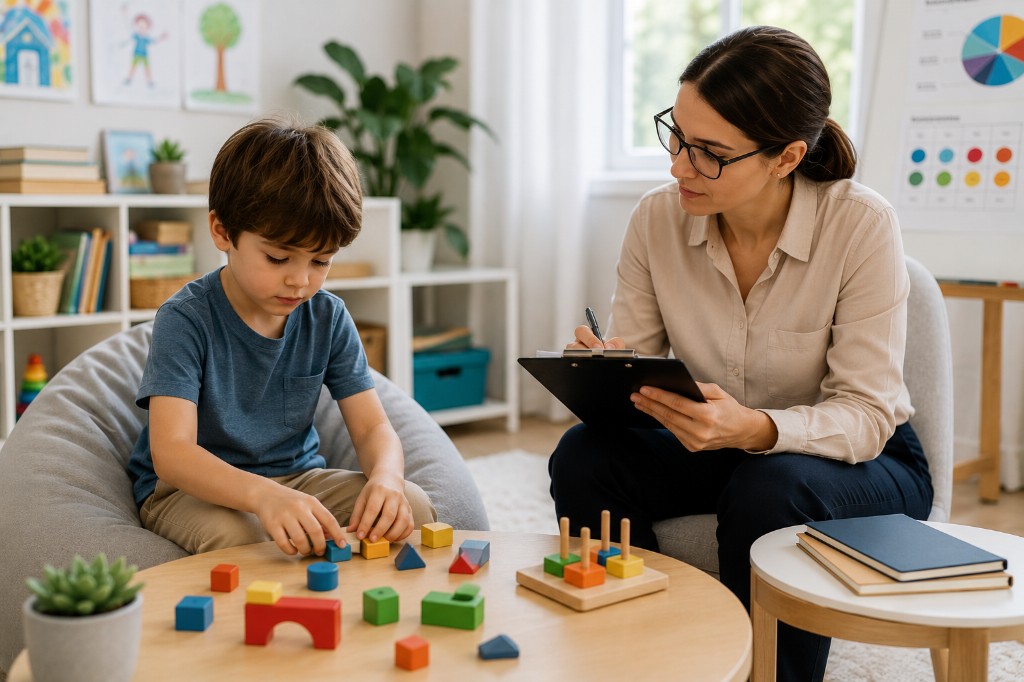
Targeted interventions addressing challenging behaviors that interfere with learning or daily functioning.

Programs focused on peer interaction, conversation skills, emotional awareness, and relationship building.
Every child learns differently. Home-based ABA therapy may be a strong fit for children who benefit from learning in familiar surroundings, require intensive caregiver involvement, or need support with routines that occur primarily at home.
A comprehensive assessment helps determine whether home-based, center-based, school-based, community-based, or hybrid services are the most appropriate option.
Families searching for home-based ABA therapy deserve access to compassionate, evidence-based care close to home.
Our team partners with caregivers to develop individualized treatment plans designed around meaningful goals, family priorities, and everyday success. Whether your child is beginning therapy for the first time or transitioning from another setting, we work to create a supportive and collaborative treatment experience.
Eden's home-based programs draw on widely cited clinical and public-health guidance while remaining individualized for each child. We use careful language—ABA may help support communication, adaptive behavior, and daily participation when clinically appropriate. Autism is a lifelong neurodevelopmental condition; ABA is not a cure, and individual progress varies.
Many Northern Virginia families use private insurance or Virginia Medicaid for home-based ABA services. Eden's intake team helps families understand documentation and authorization requirements.
Eden ABA Therapy does not guarantee insurance or Medicaid approval. Coverage varies by policy, network status, and medical-necessity criteria. Our team helps families understand requirements and submits information as permitted by each plan.
Answers to common questions about home-based ABA therapy, supervision, routines, insurance, and what to expect at Eden.
Home-based ABA therapy delivers Applied Behavior Analysis in your child's home. Skills are taught and practiced during everyday routines such as meals, play, hygiene, and transitions, with treatment supervised by a BCBA.
ABA therapy is designed to support skill development and quality of life. It does not cure autism. Services, settings, and coverage depend on clinical need, assessment results, medical necessity, payer authorization, and insurance eligibility. Outcomes vary by child and family participation.
Connect with a team that treats your home as the classroom for real-life skills. We can help with intake, insurance verification, and finding the right service setting for your family.