
Social skill assessment
Review of current peer interaction, conversation, play, and group participation to identify specific, teachable targets.
Connection & Participation
Social skills are teachable when broken into meaningful steps. Eden helps children practice peer interaction, conversation, play, shared attention, and friendship skills in supportive, data-informed ways.
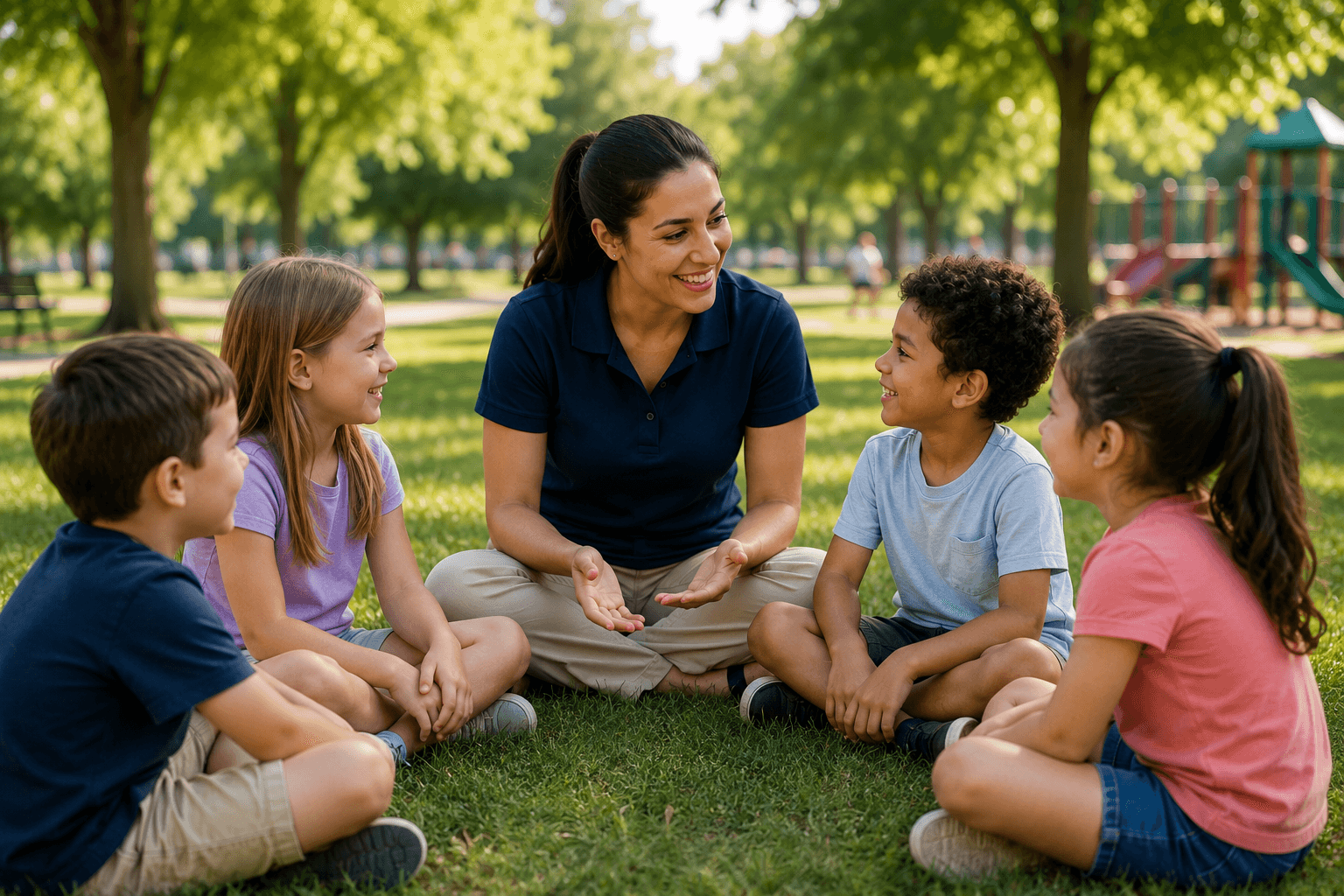
Social skills training at Eden integrates behavioral science with real social opportunities—not worksheets alone.
Review of current peer interaction, conversation, play, and group participation to identify specific, teachable targets.
Goals may include greetings, turn-taking, sharing, personal space, conversation topics, and reading social cues at the child's level.
RBT-led teaching with role-play, games, and guided interactions using positive reinforcement and prompting strategies.
When clinically appropriate, practice with peers or siblings to build generalization beyond the therapist relationship.
BCBAs design social curricula, analyze data, and adjust teaching as skills improve or new challenges appear.
Parents learn how to support playdates, parks, birthday parties, and family gatherings with confidence.
Many children benefit from explicit social teaching—especially when natural observation and imitation are not sufficient alone.
Social skills are practiced, reinforced, and measured—then generalized to real relationships and settings.
The BCBA identifies specific social deficits and strengths through observation, interviews, and standardized tools when appropriate.
Complex skills like joining play are broken into small, teachable steps with clear mastery criteria.
RBTs facilitate practice in low-pressure settings before moving to more complex social demands.
Skills transfer to playgrounds, centers, homes, and community locations where social interaction actually occurs.
Supervisors track which social targets are improving and modify programs when progress stalls.
With consent, strategies may align across home and school so the child hears consistent expectations.
Social goals are individualized to each child's developmental level and family priorities—never copied from a generic checklist.
Increase initiation and response during play, games, and group activities with same-age peers when possible.
Build greetings, questions, comments, and topic maintenance appropriate to the child's age.
Strengthen looking, showing, and coordinating attention during joint activities.
Teach turn-taking, sharing, winning/losing, and collaborative games.
Practice handling conflicts, waiting, and negotiating with appropriate adult support.
Support behavior in libraries, stores, restaurants, and family events where social rules apply.
Social skills grow in relationships. Eden coaches families to create safe practice opportunities outside therapy sessions.
Guidance on structuring short, successful peer interactions at home or in the community.
Tips for brothers and sisters to play inclusively while supporting therapeutic goals.
Families learn to notice and reinforce social attempts—not only perfect performance.
Strategies for parks, birthday parties, and religious or cultural gatherings.
With permission, Eden may share strategies teachers can use to support recess and group work.
Families choose which social goals matter most, including when a child needs rest rather than forced interaction.
Social progress can be subtle. Eden uses direct measurement so improvements are visible and programs stay accountable.
Track how often a child initiates, responds, or maintains interaction during structured probes.
Measure whether skills occur with new peers, locations, or materials—not only with one therapist.
Use simple scoring systems so caregivers understand week-to-week change.
Supervisors document program changes based on social data trends.
Parent reports from real playdates inform whether goals are working outside sessions.
Progress summaries provided to payers when re-authorization is required.
Social skills are broken into teachable components and practiced with reinforcement, prompting, and natural environment opportunities—not worksheets alone.
Greetings, questions, comments, topic maintenance, and ending conversations appropriately for the child's developmental level.
Approaching peers, maintaining play, sharing interests, and building relationships at a pace the child and family choose.
Parallel play through cooperative games, turn-taking, shared imagination, and group activity participation.
Coordinating attention during activities, waiting for turns, and responding to social bids from others.
Recognizing feelings in self and others, coping with disappointment, and understanding that others may think differently.
Negotiating turns, handling rejection, asking for help, and using words instead of aggression when frustrated.
Cafeteria, recess, group work, stores, and family gatherings where unwritten social rules apply.
Adapting when plans change, tolerating unexpected events, and practicing recovery strategies after social mistakes.
ABA-based social skills training uses task analysis, reinforcement, modeling, and data collection—practices supported in behavior analysis literature.
Social communication often overlaps with speech pathology and psychology. Eden coordinates when families receive multiple services.
Align pragmatic language, AAC, and conversation targets. Licensed SLPs provide speech therapy; ABA may support generalization of agreed-upon communication goals.
Anxiety, mood, or trauma-related concerns may benefit from psychology referral alongside social skills practice.
Sensory or motor factors affecting participation in group activities may be addressed collaboratively with OT.
With consent, share recess and group-work strategies that align with IEP social goals.
Social skills training within ABA does not replace evaluation by other licensed professionals when clinical concerns suggest it.
When pragmatic language, articulation, or AAC needs exceed ABA communication programming.
When social avoidance stems from significant anxiety, mood symptoms, or trauma requiring mental health treatment.
When sensory processing or fine motor barriers limit participation in peer activities.
When medical factors such as seizures or neurological conditions may affect social behavior—physician input is appropriate.
Referrals are clinical recommendations. Families and physicians make final decisions about additional evaluations.
Eden teaches social participation while respecting autonomy, culture, and the child's comfort.
Social skills training is often part of a broader ABA treatment plan when medically necessary. Stand-alone coverage depends on payer rules.
Payers typically authorize ABA based on comprehensive clinical need, not isolated social skills alone. Eden helps families understand how social training fits within individualized programs and payer requirements.
Speak with Eden about social skills training grounded in ABA science, BCBA supervision, and family-centered practice.